
Did the Battle of Dunkirk stop the Axis winning WWII? – Tags: Allies, Axis, Battle of Dunkirk, D Day, Dunkirk, Military History, The Long Reads, Winston Churchill, World War II
🖋️Bite-Size History | WWII
⏱️ The Long Reads • An 11-minute deep dive
The Miracle of Dunkirk: How Operation Dynamo Saved an Army. Examining the theories and counter-theories from May-June 1940
The “Conventional” Wisdom about the Battle of Dunkirk and Operation Dynamo
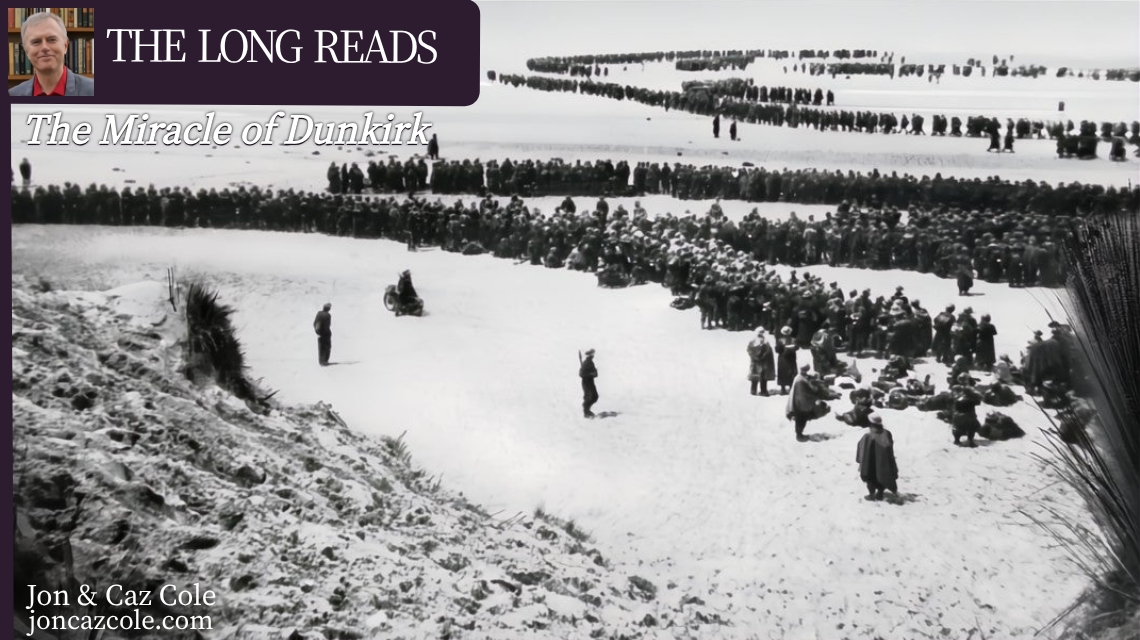
The successful, relentless advance by German Army Group A under the direction of Generaloberst Gerd von Rundstedt, under operation Fall Gelb (Case Yellow), left over 400,000 Allied troops trapped at Dunkirk, their backs to the sea, forced to abandon all their equipment.
With victory over “perfidious Albion” in his grasp, the Führer inexplicably stopped his troops advancing on Dunkirk on 24 May 1940. This blunder gave the retreating Allies enough time to create a defensive line.
This indecision on dealing the coup de grâce allowed 338,000 British and French troops to escape. Churchill and his battered British Expeditionary Force (BEF) returned to fight another day. Hitler lost his best chance to defeat the last remaining resistance in Europe. And the rest, as they say, is history.
But was it that straightforward? Let’s take a step back from this simplistic assessment. Let’s explore what was taking place in the cauldron of war and the arguments about the Battle of Dunkirk, and the Wehrmacht’s strategy that still exists until this day.
What Actually Happened Between May and June 1940?
The invasion of France and the Low Countries by Army Groups A and B under Rundstedt and Generaloberst Fedor von Bock, began on 10 May 1940. The assaults on Belgium and the Netherlands accompanied a “surprise” advance through the Ardennes by Rundstedt’s Army Group A.
This bold move, bypassing France’s “impregnable” Maginot Line, was the brainchild of Generalfeldmarschall Erich von Manstein, who would feature prominently in many other theatres of the war. With the Ardennes Forest successfully navigated, Army Group A emerged on 14 May, moved on toward Sedan, and turned north towards the English Channel.

Lord Gort (centre) (Image credit: Wikipedia)
Despite the best efforts of the retreating Allied armies, the German advance split the BEF, under Lord John Gort, Commander-in-Chief of the British Expeditionary Force (BEF), and the French and Belgian armies from French troops further south.
Reaching the Channel by 20 May, the German troops continued their northward advances. The prospect of the capture of British and French personnel, and the occupation of key strategic ports, was firmly in their sights.
Surely an outnumbered BEF, and a retreating, soon to be beaten French army, would be no match for the clinical tactics of Blitzkrieg?
So Why did the German Advance Stop?
With over 400,000 Allied troops now pinned into the Dunkirk pocket and facing the menace of Army Group A, something inexplicable happened. Rundstedt ordered a halt to the advance (and the inevitable capture of the Allied troops) on 23 May. This instruction was endorsed by Hitler the day after with the full assent of the Oberkommando der Wehrmacht (OKW or High Command of the Armed Forces) under the direction of Generaloberst Wilhelm Keitel (soon to become Generalfeldmarschall after the armistice was agreed with France in July 1940).
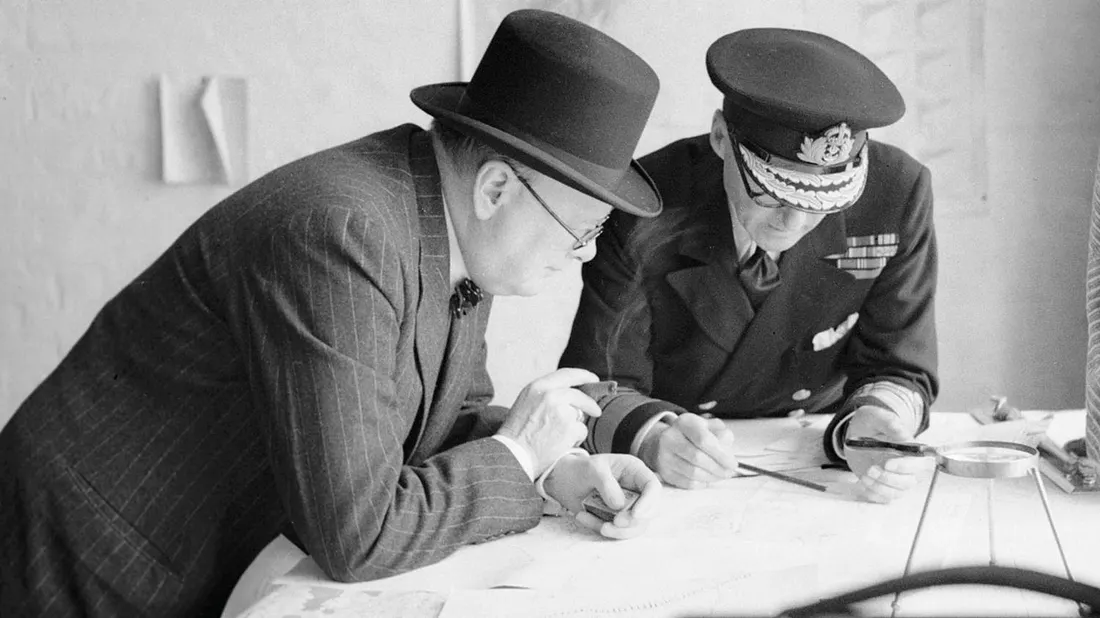
With little prospect of keeping the German forces at bay, the task of leading an evacuation mission, code-named Operation Dynamo, was given to Vice-Admiral Bertram Ramsay. With a headquarters established in the tunnels beneath Dover Castle, a rescue plan came into force. Between 26 May-4 June, the rescue of over 338,000 British and Allied soldiers from the beaches of Dunkirk took place.
Prime Minister Winston Churchill and Vice-Admiral Bertram Ramsay reviewing plans for Operation Dynamo in May 1940. (Image Credit: The Times)
Theory and Counter-Theory
In the 80+ years since the “Miracle of Dunkirk” countless theories have been provided, in part as further information has become available for deeper research.
Let’s look at some explanations for why Hitler didn’t take Dunkirk and the trapped Allied forces when they were in his grasp. Was this the first step on the road to the defeat of the Axis powers?
1. The Mutual Respect Theory
One of the earliest proponents of the idea that Hitler admired the British, its vast empire, and wanted to see Germany sitting loftily alongside its European neighbour was Sir Basil Herny Liddell Hart. A military historian and theorist, his writings suggest the following rationale for German military decisions.
But certain members of Rundstedt’s staff regarded the excuses as thin [Hitler’s reluctance to send his tanks into the marshes of Flanders — see The Swamp Theory below], and believed that Hitler had a deeper motive for his halt order. They connected it with the surprising way he had talked when visiting their headquarters at Charleville on May 24th, the day after the armoured forces had been halted in their stride.
Hitler was accompanied by only one of his staff, and talked in private to Rundstedt and the two key men of his staff — Sodenstern and Blumentritt. Here is what the latter told me: “Hitler was in very good humour, he admitted that the course of the campaign had been ‘a decided miracle’, and gave us his opinion that the war would be finished in six weeks. After that he wished to conclude a reasonable peace with France, and then the way would be free for an agreement with Britain.
“He then astonished us by speaking with admiration of the British Empire, of the necessity for its existence, and of the civilization that Britain had brought into the world. He remarked, with a shrug of the shoulders, that the creation of its Empire had been achieved by means that were often harsh, but ‘where there is planing, there are shavings flying’. He compared the British Empire with the Catholic Church — saying they were both essential elements of stability in the world. He said that all he wanted from Britain was that she should acknowledge Germany’s position on the Continent. The return of Germany’s lost colonies would be desirable but not essential, and he would even offer to support Britain with troops if she should be involved in any difficulties anywhere. He remarked that the colonies were primarily a matter of prestige, since they could not be held in war, and few Germans could settle in the tropics.”
This passage is taken from The Other Side of the Hill: Germany’s Generals, their Rise and Fall, with their own Account of Military Events 1939–1945 (London: Cassell, 1948), chapter 10, “How Hitler Beat France — and Saved England,” pp. 139–43.
This theory has become increasingly unpopular with later historians, including Dr Tim Benbow of King’s College London, who dismisses the idea of a “golden bridge” for Britain as a means to a negotiated peace.
He argues that if the strategic decision was to allow the BEF and French troops to escape, why did Göring’s Luftwaffe and Army Group B continue to pound those stuck in the Dunkirk pocket? Why not give them a rather gentler send-off from the beaches?
2. Göring’s Ego Theory
Another weak suggestion was that Hitler had promised some of the glory of an Allied defeat to Nazi heavyweight Hermann Göring, chief of the Luftwaffe.
This itself does not explain the reason to stop the advance toward Dunkirk, although it may have been a nice opportunistic moment for Generalfeldmarschall as the Allied armies were pushed backward. There’s nothing like the rest of the team doing all the hard work, only for the star striker to take that decisive penalty to win the match!
3. The Swamp Theory
In a related vein to Liddell Hart’s “Mutual Respect Theory”, is the suggestion the marshy land around Flanders played a decisive part in Hitler’s thinking. In his The Other Side of the Hill: Germany’s Generals, their Rise and Fall, with their own Account of Military Events 1939–1945, Liddell Hart writes:
A few days later Kleist met Hitler on the airfield at Cambrai, and ventured to remark that a great opportunity had been lost of reaching Dunkirk before the British escaped. Hitler replied, “That may be so. But I did not want to send the tanks into the Flanders marshes — and the British won’t come back in this war.”
Military historian Martin Marix Evans reinforced this view in his 2000 book: The Fall of France: Act With Daring. The book points to the official German army geological maps and handbooks used by Hitler and the OKW, identifying the terrain as perilous to their tanks. This view, according to Liddell Hart’s account, was not shared by many of the generals including von Kleist.
4. Another 1914 — the “Miracle of the Marne” Theory
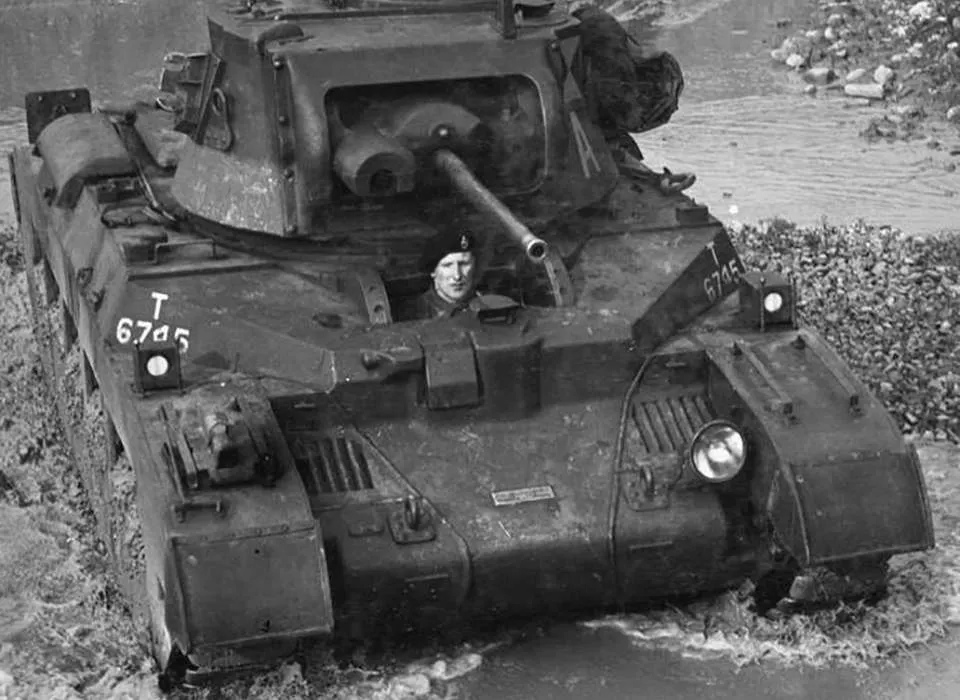
It’s easy to forget through the passage of time, and the focus on the “miracle” element of Dunkirk, that there was still Allied resistance to the German advance into France. Counter-attacks took place in Montcornet and Arras between 17–21 May. As this theory goes, many of the German generals, and Hitler, remembered only too well the 1914 counter-offensives against the Schlieffen Plan being executed by the Kaiser’s armies. This culminated in the “Miracle of the Marne” and four years of bloody trench warfare.
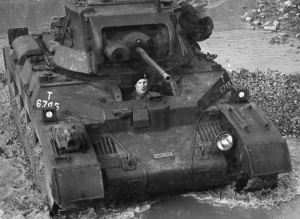
British Tank Attack at Arras — 21 May 1940 (Image credit: The National WWII Museum)
This theory also pushes the idea that the German Wehrmacht and OKW were as surprised by their rapid advances as the Allies. Perhaps taking a moment of reflection, even caution, and the opportunity to replenish (see the “Rest, Repair and Wait for Supplies” theory below) wasn’t such a bad idea to consolidate the ground already taken.
5. “Rest, Repair and Wait for Supplies” Theory
The theory which holds credibility with most historians and experts is an example of a predicament rapidly advancing German armies throughout the war experienced. In France, in the USSR, and in North Africa, their Panzers were outstripping their infantry and supply lines as a by-product of Blitzkrieg.
The Verdict on the German “Halt” Order
If you take the “Rest and Repair” theory in tandem with the growing concerns of potential counter-offensives, the decision to pause and regroup seems far less inexplicable. Perhaps the “Halt” order had elements of all the theories to a greater or lesser extent. Despite propaganda at the time and attempts at revisionist history by some of the defeated generals after the war, “Rest and Repair” is still the most likely theory.
Perhaps Hitler’s sanction of the “Halt” on 24 May was a symptom of a dictator and Commander-in-Chief of the Armed Forces on a long run of victories. But this decision not to press the advantage by taking tactical and measured approaches wasn’t something that lingered for long.
Once the reverses in the Soviet Union following Operation Barbarossa began to bite, and the Allied success of Operation Torch in late 1942 was felt, any semblance of military pragmatism evaporated.
Did the Escape of the British Expeditionary Force from Dunkirk cost the Axis the War?
Simply put: no!
It’s a nonsense to suggest the rescue of over 338,000 Allied troops led, or even contributed, to the Axis defeat in World War 2. Yes, the morale value to Britain and its allies was significant, and having over 300,000 extra soldiers is always going to be better. But let’s stay grounded in facts.
In May 1940, the Wehrmacht’s might included 3.5 million men, 10 Panzer divisions and over 5,500 aircraft. For the duration of the war, although of increasingly poorer quality and training, Germany called upon almost 13.6 million men to serve in the army.
After the fall of France, estimates suggest the number of incarcerated French soldiers totalled 1.8 million. If you factor in the resources Mussolini threw in from Italy, and those of Imperial Japan from December 1941 onward, the escape of 338,000 Allied troops becomes inconsequential to the outcome.
If, hypothetically, Operation Dynamo had failed, would Britain have then collapsed? This is highly doubtful. Britain was more than able to defend itself.
At the start of the war, the Royal Navy was the largest in the world, boasting five battleships and battlecruisers, seven aircraft carriers, 66 cruisers, 184 destroyers of all types, 60 submarines and 45 escort and patrol vessels. At the time of Dunkirk, the Royal Airforce totalled around 5,000 aircraft. Hitler abandoned Operation Sealion, the planned invasion of Great Britain, because of the defeat of the Luftwaffe in the Battle of Britain.
The recovery of those from the beaches of Dunkirk had no bearing beyond improved morale on the outcomes of these battles. It cannot be considered a portent of future defeat.
Far more factors were of greater consequence to Axis prospects of victory and led to their eventual defeat, including:
- The over-extending of the Wehrmacht on the Eastern front and the impact on supply lines. Even a negotiated peace with Britain, and not having to fight a two-front war, is unlikely to have changed the outcome of Operation Barbarossa and all that followed.
- The resulting war on two fronts in the East and West.
- The weakness of Mussolini and Italian forces as a reliable ally.
- A vacuum of leadership beyond the Führer, including Hitler’s lack of faith in his generals, ignoring their military advice, and an obsession with never retreating, even when it made military sense to do so.
- An inadequate war economy and one that could not compete with that of the USA when in full flow. Even the efforts of Hitler’s favourite architect, Albert Speer, after succeeding Fritz Todt as Minister of Armaments and Munitions in 1942, was insufficient despite the improvements it brought — although largely thanks to the huge escalation in using secondary labour to increase production.
- The introduction of the USA into the war after Pearl Harbor on 7 December 1941 and the immediate declaration of war by Nazi Germany on Roosevelt’s nation.
- Lack of coordination between Axis powers in stark contrast to that of the Allies and the “Big Three” of Churchill, Roosevelt and Stalin.
- The overwhelming combined strength of the Allies from 1941 onwards.
The list goes on.
The Final Word
The significance of the “Miracle of Dunkirk” is enormous. It cannot be understated, if for no other reason than over 300,000 troops avoided imprisonment (or worse) in an escalating and terrible war.
But we need to be careful of not assigning its significance to the beginning of the defeat of the Axis powers — this is a lazy and unsupported assessment of an extraordinarily complex struggle and does not do justice to all the other factors, battles and personnel on both sides of the conflict.
To put this into final context, I will leave you with the words of a speech Churchill made on 10 November 1942 following Montgomery’s victory at the Battle of El Alamein:
“This is not the end. It is not even the beginning of the end. But it is perhaps the end of the beginning.”